CoreFlowMC
Physics-guided · machine learning · DHI validation

AI-powered exploration intelligence

Transform seismic uncertainty into investment-grade exploration opportunities through physics-guided prospect validation and machine learning.

Our proprietary workflow reveals direct hydrocarbon indicators (DHI) in invisible reservoirs, the low-amplitude targets that conventional screening overlooks. It works at depths up to 8,000 m, on 3D, 2D and multi-client seismic data. No other team or company offers this capability.

Where the workflow applies
ObjectiveIdentify direct hydrocarbon indicators (DHI)
TargetInvisible reservoirs
DepthUp to 8,000 m
Seismic data3D · 2D · multi-client
SettingsClastic and carbonate
Regional pace10,000 km² within two months
19+
Years domain expertise
8,000 m
Maximum target depth for DHI detection
3D + 2D
Seismic data, including multi-client surveys
2
Energy Awards, 2025 and 2026
Approach

Trusted science. Practical decisions.

Physics-based

Every result is anchored in rock physics and AVO (amplitude versus offset) theory before any model is trained.

AI-enhanced

Machine learning screens large volumes for the subtle signatures an interpreter cannot scan by hand.

DHI validated

Each lead is checked against its direct hydrocarbon indicator elements and given a confidence score.

Prospect ranked

Validated opportunities are ranked with probabilistic risk, ready for a portfolio decision.

Technology

CoreFlowDDAV™ exploration intelligence, end to end

CoreFlowDDAV™ (Deep Detect AVO Validation) is built to find what conventional screening leaves behind: invisible reservoirs and their DHI elements.

How our workflow differs

Conventional screening CoreFlowDDAV™
What it looks for High-impedance, bright-amplitude opportunities. These carry more risk: they are often water-wet or low-quality reservoir. Invisible reservoirs: low-amplitude targets, extracted together with their DHI elements.
Depth DHI confidence falls away as amplitude weakens with depth. Engineered for targets up to 8,000 m.
Seismic data Usually limited to 3D volumes. 3D and 2D seismic, including multi-client surveys.
Rock type Mostly clastic amplitude plays. Clastic basins with CoreFlowDDAV™; carbonate basins with CoreFlowCDAV.
Regional scale Prospect-by-prospect interpretation. Fast DHI extraction across regional data: 10,000 km² within two months.
What you receive An amplitude anomaly map. A physics-anchored DHI confidence score and a ranked prospect list.
Workflows

Our innovative workflows and where each is used

CoreFlowDDAV™

Deep Detect AVO Validation

Physics-guided AVO and DHI screening for deep clastic targets, with a quantified DHI confidence score.

Use it to find invisible, low-amplitude reservoirs down to 8,000 m on 3D and 2D seismic.

CoreFlowCDAV

Carbonate DHI and fracture screening

DHI and fracture-indicator screening built for the carbonate domain, to 8,000 m.

Use it to detect DHI in porous carbonate capped by tight carbonate, and to separate hydrocarbon-bearing from water-bearing carbonate.

CoreFlowDI

Facies and fluid-signature extraction

Gradient-boosted machine learning that extracts facies and fluid signatures from the seismic.

Use it to define sweet-spot areas once CoreFlowDDAV™ screening has located the opportunity.

CoreFlowDR

Contingency workflow

A reduced-input route for surveys where the far-angle stack is unavailable.

Use it to screen legacy or incomplete data; it delivers about 60% of CoreFlowDDAV™'s DHI opportunity identification.

Stochastic Multi-Scenario Engine

Probabilistic uncertainty simulation

Probabilistic simulation of AVO and elastic response across many rock and fluid scenarios.

Use it to quantify how far the hydrocarbon case can be told apart from brine before committing to a well.

Regional DHI extraction

Basin and multi-client scale

CoreFlowDDAV™ run at regional scale: 10,000 km² within two months.

Use it to screen licence rounds, regional 2D grids and multi-client seismic libraries for DHI leads.
Value

Why CoreFlowMC

Reduce exploration risk

Physics-anchored validation before capital is committed.

Identify subtle opportunities

Invisible reservoirs that amplitude-led screening passes over.

Increase prospect confidence

A quantified DHI confidence score for every lead.

Accelerate decision making

Ranked prospects with the evidence attached.

8,000 m

Deep reach

DHI detection for targets up to 8,000 m, in clastic and carbonate basins.

3D and 2D

Works on the data you have

The same workflow runs on 3D volumes and 2D lines, including multi-client seismic.

10,000 km²

Fast DHI extraction for regional data

Regional screening completed within two months.

Evidence

Validation & recognition

AWARD

Energy Award winner

Back-to-back wins in 2025 and 2026.

PEER REVIEW

International peer-reviewed publications

Many papers published in international peer-reviewed journals.

INDUSTRY

Industry validation projects

Blind-tested well predictions.

Publications

Peer-Reviewed Publications

Published research validating the DDAV™ methodology

Nature · 2025

Machine learning and AVO class II workflow for hydrocarbon prospectivity in the Messinian, offshore Nile Delta, Egypt

Scientific Reports (Nature Portfolio) · January 2025

Spectral decomposition combined with ML detects low-amplitude gas sands that conventional amplitude screening misses. This for shallow section

Read paper
Elsevier · 2025

AVO class II advanced prospectivity workflow for deep Miocene in West Delta Deep Marine, offshore Nile Delta, Egypt

Journal of African Earth Sciences · March 2025

A novel workflow to de-risk deep Miocene prospects through AVO Class II analysis. This can detect invisible reservoirs and identify the DHI element up to 8000m.

Read paper
EAGE · 2017

Reducing the risk of hydrocarbon exploration and lithology characterization using a neural network approach in the West Delta Deep Marine Concession Area, offshore Nile Delta, Egypt

First Break (EAGE) · July 2017

Neural-network lithology classification and gas-chimney probability volumes used to quantify prospect chance of success. This can detect invisible reservoirs and identify the DHI element up to 8000m.

Read paper
Free to use

Online toolbox

32 subsurface tools that run in your browser, from rock physics to well planning.

Open the toolbox
Regions

Markets we serve

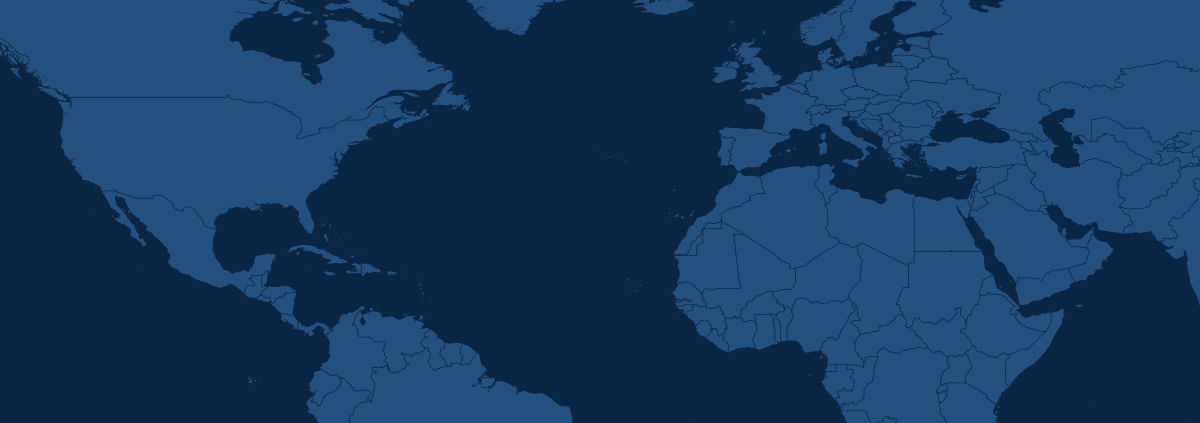
Map from North America to the Middle East with the five markets CoreFlowMC serves marked
North America
Mediterranean
North Africa
Middle East
West Africa
01
Middle East
02
North Africa
03
Mediterranean
04
West Africa
05
North America

Case studies

OFFSHORE NILE DELTA · MIOCENE

Deep Miocene, offshore Nile Delta

AVO Class II soft-kick detection for deep Miocene targets, using rock physics modelling and stochastic simulation across cap-rock scenarios.

PLIOCENE · MESSINIAN

Low-amplitude prospect identification

Spectral decomposition, AVO classification and a neural network used to detect low-amplitude gas sands.

MIOCENE · PLIOCENE

Prospect ranking and risk reduction

An integrated AVO and machine learning framework, validated by matching forward-modelled and machine-learning gas sand probability cubes.

Investor profile

Investor relations
Investors@CoreflowMC.com
Get started

Ready to de-risk your next prospect?

Start with one prospect or one regional dataset.

Book a meeting
Pick a time on our Cal.com calendar.